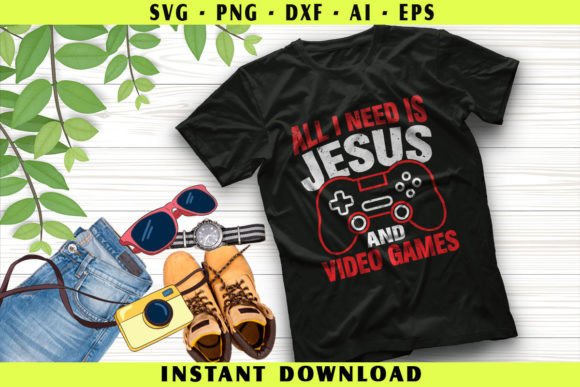
Jesus Video Games: Graphics & Crafts Asset Review
First Impressions: Balancing Humor and Faith in Visual Identity
As a brand designer reviewing assets for niche markets, my first interaction with the Jesus Video Games graphic was an assessment of tonal balance. In the intersection of faith-based content and gaming culture, visual communication is a high-stakes endeavor. This asset immediately presents itself as a bridge between two distinct demographics: the devout Christian community and retro gaming enthusiasts. The mood is undeniably lighthearted and nostalgic, evoking the pixelated aesthetic of 8-bit and 16-bit eras while incorporating religious iconography in a respectful yet playful manner.
For content creators and small business owners, this graphic design asset signals accessibility. It moves away from the often stern or overly traditional visuals associated with religious merchandise, offering a fresh entry point for younger audiences or those who appreciate geek culture. However, as a marketer, I note that this design carries a specific emotional weight. It is not suitable for solemn liturgical seasons or serious theological teaching series. Instead, it thrives in casual branding environments, youth group promotions, gamer-focused ministry outreach, and lifestyle merchandise. The humor acts as a hook, but the execution determines whether that hook converts into audience trust or alienates the core demographic through perceived irreverence.
Deploying the Asset Across Merchandise and Digital Campaigns
In a recent campaign simulation for a Christian creative marketplace, we tested how this Funny Jesus Video Games SVG Design performs across physical and digital touchpoints. The versatility of the file format is paramount here. Because the files are complete and vector-based, the scalability supports everything from intricate apparel printing to crisp social media avatars without pixelation.
For physical products, this asset excels in printable design applications. We found it particularly effective on dark-colored cotton T-shirts and hoodies, where the bright, contrasting colors of the pixel art pop against navy or black fabric. The design’s composition allows for centered chest placement on apparel or full-wrap prints on mugs and phone covers. For wall art and posters, the retro aesthetic lends itself to gallery-style layouts, appealing to collectors of religious pop art. When creating pillows or bags, the graphic serves as a conversation starter, transforming functional items into statements of identity.
On the digital front, this SVG design integrates seamlessly into Canva templates for Instagram posts and Pinterest pins. As a digital product, it retains clarity when scaled down for profile pictures or expanded for YouTube thumbnails. In our testing, the asset performed best when used as a focal point in carousel slides explaining gaming events or church esports tournaments. It provides immediate visual context, reducing the cognitive load for viewers scrolling through feeds. For email marketing banners, the graphic adds personality to newsletters, potentially increasing open rates by breaking the monotony of text-heavy religious communications.
Strategic Alignment with Marketing Goals and Audience Trust
Effective content marketing relies on consistency and relevance. Using Jesus Video Games strategically can strengthen brand recognition within the "Christian Gamer" niche. By adopting this visual language, brands signal that they understand the specific subculture they are serving. This alignment fosters stronger emotional connections because the audience feels seen rather than marketed to. The nostalgia factor inherent in the pixel art style triggers positive memories, which can be transferred to your brand or cause.
However, maintaining audience trust requires careful curation. This asset supports marketing goals by providing a strong visual hierarchy; the eye is drawn immediately to the recognizable character silhouette before processing the accompanying text. This makes it ideal for hero graphics on landing pages promoting gaming conventions, charity streams, or new podcast episodes. Yet, professional branding demands that we do not rely solely on the novelty. The design must be paired with clear value propositions. If you are selling a course on digital discipleship or promoting a youth event, the graphic attracts attention, but your copy must deliver substance. The asset works best when it supports a narrative of joy, community, and modern faith expression, rather than serving as a standalone joke.
Optimal Placement vs. Contextual Limitations
Through practical application, we have identified specific environments where this creative design shines and areas where caution is necessary. The asset is a powerhouse for:
- Social Media Covers: Establishing an immediate vibe for Facebook groups or Discord servers dedicated to Christian gaming.
- Packaging Accents: Adding flair to sticker packs, thank-you cards, or unboxing experiences for e-commerce sellers.
- Editorial Layouts: Breaking up text in blog posts about video game reviews from a faith perspective.
- Event Flyers: Creating excitement for LAN parties, watch parties, or charity fundraisers.
- Digital Ads: Stopping the scroll in targeted campaigns for gaming accessories or faith-based apparel.
Conversely, there are critical limitations. This asset should be avoided in formal corporate branding for law firms, financial institutions, or traditional church administration unless the specific department focuses on youth or media. It struggles in dense information layouts where the detailed pixel art competes with data tables or heavy typography. On low-contrast backgrounds, the intricate edges of the sprite can become muddy, reducing readability. Furthermore, for brands cultivating a minimalist or luxury aesthetic, this bold, colorful illustration may clash with the established visual identity. Always assess whether the humor aligns with the gravity of the message; using this for grief support resources or doctrinal statements would be a catastrophic misalignment.
The Designer’s Checklist: Technical Validation and Licensing
Before integrating Jesus Video Games into any paid campaign or client project, a rigorous technical review is essential. As experienced designers know, a beautiful asset can fail if not properly vetted. Start by testing the graphic against your existing brand color palette. While the original colors are vibrant, you may need to adjust hues to match your specific brand guidelines. Check the asset's performance in monochrome; a strong illustration should remain recognizable and impactful even in single-color screen printing or embroidery scenarios.
Typography pairing is another critical step. This retro asset pairs naturally with pixelated display fonts or clean, geometric sans-serifs that echo modern tech aesthetics. Avoid ornate scripts or traditional serifs, as they create visual dissonance that can make the design look amateurish. Test readability at mobile sizes; what looks detailed on a desktop monitor may become an indistinguishable blob on a smartphone screen. Place the asset inside real campaign mockups rather than viewing it in isolation. Seeing it on a curved mug or a textured tote bag reveals potential distortion issues that flat viewing misses.
Finally, verify the commercial license. Just because a design bundle is available for purchase does not mean it grants unlimited commercial rights for mass production. Confirm whether the license covers print-on-demand services, digital resale, or client work. For small business branding and digital sellers, understanding these legal boundaries protects your enterprise from infringement claims. Compare the asset against competitor visuals to ensure your usage brings something unique to the market rather than replicating saturated trends. When validated correctly, Jesus Video Games serves as more than just clipart; it becomes a strategic component of a cohesive, engaging, and culturally relevant brand identity that resonates deeply with a passionate niche audience.